
Heat Wave Surge Planning for Funeral Homes: Backup & Overflow Body Storage in 2026
Heat waves cause sharp, temporary spikes in cases. Here's a step-by-step surge plan for 2026 — measuring your capacity gap, choosing an overflow strategy, pre-arranging fast equipment, and coordinating regionally.

Extreme heat doesn't arrive on a schedule, but its effect on deathcare facilities is predictable: a sharp, temporary spike in cases that can outrun normal cold-storage capacity. The facilities that move through a 2026 heat wave smoothly are the ones that built a surge plan before the thermometer climbed. Here's how to build yours.
Why surge planning matters
Most funeral homes, hospital morgues, and coroner offices size their refrigeration for typical volume plus a modest cushion. A heat wave can push intake well beyond that cushion for one to three weeks, then recede. You don't want to buy permanent capacity for a temporary spike — but you do need a plan to absorb it without compromising dignity, compliance, or preservation.
Step 1: Know your baseline and your gap
- Baseline: your normal peak simultaneous body count.
- Usable capacity: rated capacity minus the space you realistically can't use.
- Surge gap: the difference between usable capacity and a realistic surge (often 30–50% above peak).
Our mortuary cooler size guide helps you put numbers to this.
Step 2: Choose your overflow strategy
| Strategy | When it fits |
|---|---|
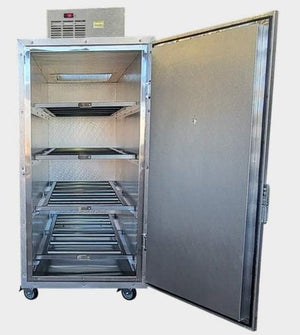
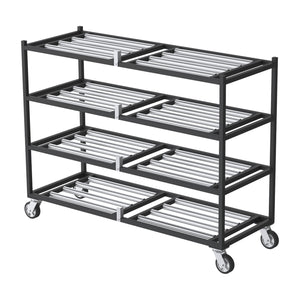
| Add density with roller racks | Fastest, lowest-cost capacity gain when floor space allows |
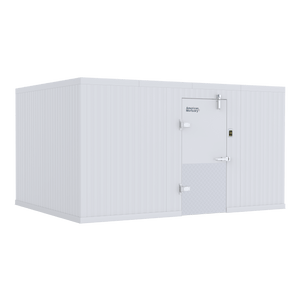
| Add a walk-in cooler | Permanent step-up that also covers future growth |
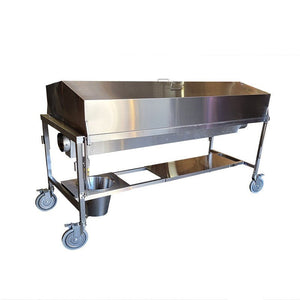
| Roll-in coolers | Cot-direct overflow with minimal handling |
| Ready-to-ship units | When a surge is imminent and you need capacity in days |
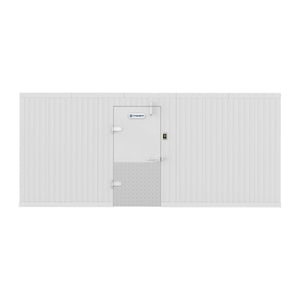
| Custom / large builds | High-volume institutions and regional staging |
Step 3: Pre-arrange the fast options
The time to find equipment is before the surge, not during it. Confirm now:
- Which configurations are ready to ship and how fast they reach your region — see delivery times by region.
- Your electrical readiness (208–230V, breaker capacity) for a quick add.
- Financing, so budget isn't the bottleneck — see financing options.
Step 4: Coordinate regionally
Heat waves are regional events. Establish mutual-aid relationships with nearby funeral homes, hospitals, and your county coroner or medical examiner so overflow can be shared. Knowing who has spare capacity — and who to call — is part of a complete plan.
Heat-wave surge checklist
- Document baseline, usable capacity, and surge gap.
- Pick a primary and backup overflow strategy.
- Confirm lead times and electrical readiness in advance.
- Pre-approve financing or a purchase path.
- Service existing coolers so they hold under high ambient load.
- Set up regional mutual-aid contacts.
Frequently asked questions
How much overflow capacity should a funeral home plan for?
A practical target is 30–50% above your normal peak, adjusted for your service area's history.
What's the fastest way to add body storage before a heat wave?
Adding roller-rack density to an existing cooler is fastest; for new equipment, ready-to-ship units can arrive in days.
Is it better to buy capacity or plan temporary overflow?
If surges are recurring, permanent capacity usually pays off. For rare events, a documented overflow and mutual-aid plan may be enough.
What power does an added cooler need?
Most units run on 208–230V single-phase; confirm breaker capacity before a surge so installation isn't delayed.
Build your surge plan with us. Call 1-888-792-9315 or email po@mymortuarycooler.com. Factory-direct from Johnson City, Tennessee.

