



Resources
Upright Mortuary Cooler Pro Tips 2026 — Drainage, DOE Efficiency & Sizing Done Right
2026 pro tips: why self contained units now need drainage plans, DOE AWEF efficiency & EPA refrigerant changes, and how undersized compressors become huge replacement bills.
Upright Mortuary Cooler Pro Tips 2026 — Drainage, DOE Efficiency & Sizing Done Right
The 2026 upright mortuary cooler is a different machine than the one you bought ten years ago. New DOE efficiency floors, EPA refrigerant transitions, and packaged systems that — despite the name — are no longer truly "self contained" when it comes to drainage. These are the pro tips that keep a $9,000 cooler from becoming an $18,000 problem.
Upright factory assembly: box only
Where offered and selected on the exact upright cooler or freezer model, factory assembly covers the box only, with casters installed when selected and applicable. Interior shelving installation and setting or installing the compressor/refrigeration unit are not included. A factory-assembled box still requires the separate interior installation, refrigeration placement, connection and startup work described in the equipment instructions.
Unassembled-only models remain unassembled only, and shell-only orders do not include refrigeration. Cabinet dimensions, usable openings, tier spacing, rack/tray ratings and the complete installed height must match the exact model and current factory drawing. Caster wheel diameter is not the installed caster-height allowance. Use the exact refrigeration package instructions and nameplate for clearances, electrical supply, drainage and commissioning; generic cooler values are not freezer specifications.
Last updated: February 13, 2026. This page may be updated as new information becomes available.

Pro Tip #1 — "Self Contained" No Longer Means Zero Plumbing
Legacy packaged units evaporated their own condensate quietly for years. 2026-forward high-efficiency systems run colder coils and longer optimized cycles — and in high-humidity or extended-run environments, the internal re-evaporation pan can overflow. The manufacturer built in a 3/4″ NPT external drain connection for exactly this reason, and compact P1 cabinets ship with a 5/8″ drain that must always be connected. Plan drainage at purchase, not after the first puddle. Full requirements: Packaged Refrigeration Manuals & Startup Guide and our drainage deep-dive.
Quick Facts from the Manual — Condensate & the Re-Evaporation Pan
During operation, hot refrigerant gas passes through the re-evaporation pan and evaporates condensate water from the evaporator coil. In most cold storage applications, the re-evaporation pan is sufficient to handle all evaporator condensate water, eliminating the need for an external drain line.
For applications with high indoor humidity and/or extended run times, there is a risk of condensate water overflow of the re-evaporation pan. For those applications, the indoor PRO³ includes a 3/4″ NPT external drain connection which may be connected to a remote drain via a field-supplied condensate pump or external drain line.
Pro Tip #2 — Know the DOE & EPA Landscape You're Buying Into
Two federal frameworks shape every 2026 refrigeration purchase:
- DOE efficiency standards (10 CFR Part 431, walk-in coolers and freezers): refrigeration systems are rated by AWEF — Annual Walk-in Energy Factor — and must meet DOE minimums. Current PRO³ packages post an AWEF of 5.61, meeting the DOE floor. Higher AWEF means less electricity per BTU of cooling, every hour, for the life of the unit. The original standards trace to the Energy Independence and Security Act (EISA 2007), which is why our spec tables cite DOE/EPA EISA 2007 compliance. Read the DOE's program directly: U.S. Department of Energy — Appliance & Equipment Standards Program.
- EPA refrigerant transition (AIM Act): the EPA's phasedown of high-GWP HFCs pushed 2026 equipment to low-GWP refrigerants such as A2L blends, with further stepdowns scheduled through the 2030s, meaning today's compliant purchase is also tomorrow's. These systems are UL listed, extremely efficient, and require A2L-qualified service personnel per UL 60335-2-89. Read the EPA's transition rules and forecast directly: U.S. EPA — HFC Phasedown under the AIM Act. Our A2L explainer covers what that means day-to-day.
Pro Tip #3 — Undersized Refrigeration Is the Most Expensive "Savings" in the Industry
Failure to properly size your refrigeration is how a cheap purchase becomes a huge replacement bill. An undersized system runs near-continuous duty: the compressor never rests, the coil never fully defrosts, condensate production outruns the pan, and the compressor — the most expensive component in the box — wears out in a fraction of its design life. Then you're paying for a crane, a tech, a new package, and downtime, instead of the few hundred dollars the correctly sized system cost up front. Spend the money now, do it right, and maintain the unit.
And know this before you buy: refrigeration upgrades are critical, and compressors and refrigeration systems that were not sized properly are non-returnable. All refrigeration products purchased on or after 1/1/2026 are 100% non-returnable under any circumstances — sizing mistakes cannot be undone at the returns desk, which is exactly why the factory sizing call is free. See the Returns and Cancellations Policy.
Sizing inputs that matter: body capacity and case turnover, bariatric mix, door-cycle rate, room ambient, and regional humidity — our capacity planning guide and capacity calculator get you close, and the factory gets you exact.
Pro Tip #4 — Electrical: Four Rules the Manual Marks IMPORTANT
IMPORTANT
- Do not use extension cords to connect the unit to power.
- Plug in to a grounded three-prong outlet.
- Do not remove the grounding prong.
- Do not use a power adapter.
These four lines are printed in the manufacturer's manual for a reason — they're the most commonly violated rules in the field and the fastest way to a damaged unit and a voided warranty. Most uprights run on a dedicated 115V/20A circuit with the factory-supplied NEMA 5-20R cord and plug — no adapter should ever be needed.
Pro Tip #5 — Ventilation and Ambient Are Performance Specs, Not Suggestions
Indoor packaged units are rated for 50–100°F ambient with free condenser airflow. Starve the condenser — enclosed closet, boxes stacked on top, fume exhaust nearby — and head pressure climbs, efficiency falls, and warranty exposure opens. Two feet of clearance above, ventilated space, nothing on the roof. Full rules in Caring for Your Mortuary Cooler in 2026.
General Safety Information (Per the Manual)
- Installation and maintenance to be performed only by a licensed contractor.
- Ensure that the structural integrity of the box can withstand the weight of the PRO³ — see the Tech Bulletin for unit weights.
- Avoid contact with sharp edges and coil surfaces; they are a potential injury hazard. Wear gloves during moving and rigging.
- Make sure all power sources are disconnected before any service work is done on units.
Standard Installation Procedure — Indoor Use (11 Steps)
The manufacturer's full indoor installation sequence. The big items — like adding water to the P-trap — are the ones most often skipped:
- Inspect packaging for shipping damage. Open the package and inspect the unit for concealed damage.
- Review the space and location requirements in the manual.
- Provide a finished opening in the box ceiling, to the appropriate dimensions and structural strength.
- DO NOT remove or disengage any box cam-locks in order to install the PRO³ unit.
- Clean the roof of the box to provide a good sealing surface for the unit weatherstrip. Refer to the box manufacturer's instructions to ensure the integrity of the exposed foam in the panels is not compromised.
- Check the mounting surface with a level — PRO³ units require a surface within 1° of level or better and no more than a 5/8″ drop per 3 feet (17 mm per meter).
- For walk-in boxes with aluminum top panels, place a thermal break on the roof adjacent to the opening to prevent sweating.
- Place the unit gently into the provided opening with the evaporator airflow directed toward the door. Be careful not to damage the grill during installation.
- Ensure that the condenser airflow is not obstructed.
- Install the trim around the inside opening with the hardware provided.
- Add water to the condensate drain line to maintain the liquid seal in the P-trap.
Full manuals, wiring diagrams, and tech bulletins: Packaged Refrigeration Manuals & Startup Guide.
Pro Tip #6 — Maintenance Is Cheaper Than Any Repair
- Quarterly: clean condenser coil, clear and flush drain lines, verify P-trap seal, inspect door gaskets.
- Monthly: verify set-point and pull-down on the Dixell controller; log or automate temperature records.
- Annually: licensed tech inspection — refrigerant circuit, electrical terminals, defrost operation.
- Always: dedicated circuit, no extension cords, factory wiring untouched.
Pro Tips FAQ
What is AWEF and why should I care?
Annual Walk-in Energy Factor — the DOE's efficiency metric for walk-in refrigeration systems under 10 CFR Part 431. Higher AWEF = lower operating cost for the unit's entire service life.
Is A2L refrigerant safe in a funeral home?
Yes. A2L refrigerants are low-GWP and mildly flammable, and the systems are built to UL 60335-2-89 with sealed charges. Service must be done by an A2L-qualified technician.
Do 2026 self contained units require drainage?
Sometimes — and more often than legacy units. High humidity, high temperature, or extended run times require routing the external drain connection to a drainage source or condensate pump. P1 cabinets always require the drain connected.
Why do I add water to the drain line at startup?
To establish and maintain the liquid seal in the P-trap — step 11 of the manufacturer's standard installation procedure. A dry trap breaks the seal and invites air and odor migration through the drain.
Can I run the cooler on an extension cord temporarily?
No. The manual is explicit: no extension cords, no power adapters, never remove the grounding prong. Grounded three-prong outlet on a dedicated circuit, period.
Who can install or service the unit?
A licensed contractor only, with all power disconnected before service, gloves during moving and rigging, and structural verification of the box against the unit weight in the Tech Bulletin.
What does undersizing actually cost?
Continuous compressor duty, premature compressor failure, iced coils, condensate overflow, and emergency replacement — commonly double or more the price delta of buying the right capacity initially. And the improperly sized unit is non-returnable.
Can I oversize instead "to be safe"?
Grossly oversized systems short-cycle, which brings its own wear and humidity-control problems. Right-size against real case load — that's what the factory sizing call is for.
Where will refrigerant rules go next?
The EPA's AIM Act phasedown continues stepping down HFC production through the 2030s — buying current-generation low-GWP equipment now positions you ahead of the curve rather than behind it. Follow the EPA HFC phasedown page for the schedule.
How do I keep DOE/EPA compliance simple?
Buy current-generation equipment (it ships compliant), keep the manuals on file, use qualified service, and don't retrofit old refrigerants into new systems.
Where do I find the official manuals?
All current Heatcraft Corp releases and tech bulletins: Packaged Refrigeration Manuals & Startup Guide.
Who do I call before ordering?
1-888-792-9315 — sizing, drainage, ventilation, and startup review are free with every quote.
Size it right the first time — and never buy the same cooler twice.
Factory sizing against your case load, climate, and floor plan, free with every upright cooler quote.
Call 1-888-792-9315 or email cool@mymortuarycooler.com · Request a Quote
Shop Upright Mortuary Coolers
Compare the actual equipment below, choose the required options and add an eligible configuration to your cart. Quote-only and configured systems retain their dedicated product path.
- Choose the equipment
- Select options and quantity
- Review your cart or itemized quote

THE USA
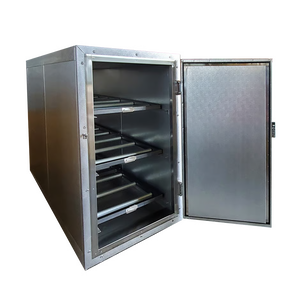
2-Body Mortuary Refrigerator Shell
 Estimated from
2-Body Mortuary Refrigerator Shell
$4943.9
Check financing
Equipment estimate. Approval required. Tax and delivery extra.
PO accepted

THE USA
2-Body Extra-Wide Mortuary Refrigerator
Estimated from
2-Body Extra-Wide Mortuary Refrigerator
$8473.41
Check financing
Equipment estimate. Approval required. Tax and delivery extra.
PO accepted

THE USA
3-Body Extra-Wide Mortuary Refrigerator
Estimated from
3-Body Extra-Wide Mortuary Refrigerator
$8770.41
Check financing
Equipment estimate. Approval required. Tax and delivery extra.
PO accepted

THE USA
3-Body Mortuary Refrigerator
Estimated from
3-Body Mortuary Refrigerator
$8315.01
Check financing
Equipment estimate. Approval required. Tax and delivery extra.
PO accepted
Compare cold storage around the space and loading plan
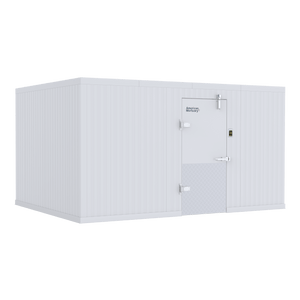
Start with the equipment you need to move into storage, the usable room dimensions and the available access route. An upright refrigerator, a roll-in cooler and a walk-in system are different configurations; compare their actual listings before choosing.
- Capacity and access: confirm the listed storage arrangement and loading direction.
- Fit: compare exterior and usable dimensions, door clearance and the delivery route.
- Configuration: identify refrigeration, floor, rack and tray selections separately.
- Project scope: confirm utilities, delivery requirements and the applicable written warranty.
Plan a phased mortuary-cooler replacement
Start with an inventory of the equipment in service, its dimensions and the workflow that must stay available during replacement. Identify the units needed first, the interfaces that must remain compatible and the later phases you want to budget. Separate a planning quantity from an approved purchase.
- For each phase, identify the model or specification, quantity, delivery location and intended purchasing period.
- Record dependencies such as door clearances, loading direction, transfer height, tray size, floor conditions and utilities where relevant.
- Request separate line items for equipment and selected accessories so the order can be reviewed by location and fiscal period.
- Review quote validity, current availability and delivery requirements before approving each phase; a planning quote is not a promise of a fixed future price.
Request a phased equipment or multi-location quote with the first purchase and later requirements clearly identified. Use the same approach for an independent facility, a public department or a corporate equipment-replacement program.
For several products or locations, request an itemized Upright Mortuary Coolers quote with selected models, quantities and delivery ZIP codes. Use general customer support for selection questions, and review the written warranty terms before ordering.
Plan year-end equipment purchases around the actual equipment and timing
Review current catalog prices, choose the required configuration and separate the first purchase from later replacement phases. Build an itemized priced quote, or request a formal equipment quote with quantities, locations and your purchasing period. Request written price validity rather than assuming an unannounced future price increase or an additional sale discount.
Can Section 179 affect an equipment purchase?
For tax years beginning in 2026, IRS Revenue Procedure 2025-32 sets a maximum Section 179 expense deduction of $2,560,000, reduced when qualifying property placed in service exceeds $4,090,000. These are statutory limits, not a promise that this purchase or every buyer qualifies.
The IRS explains that property is generally placed in service when ready and available for its specific use. Eligibility, business use, taxable income and other requirements matter; ordering, financing or paying before year-end does not by itself establish a deduction. Confirm treatment and timing with your tax professional before relying on a tax benefit.
Use our 2026 Section 179 planning guide and illustrative calculator alongside the selected model's requirements. Confirm freight, installation responsibilities and availability separately; a year-end planning request is not a delivery guarantee.
Compare your options. Choose your next step.
One source for funeral supplies and mortuary equipment, with nationwide shipping. Review the Upright Mortuary Coolers selection, compare product specifications and current pricing, then order the configuration you need or request an itemized quote.
- Choose the modelCompare the details against the work you need to do.
- Set your quantitiesReview the selected options and equipment subtotal.
- Buy or request a quoteReview freight, tax and available payment terms separately.
Need several items or delivery to more than one location? Include the models, quantities and delivery ZIP codes in your request. For general questions, contact customer support.