
Outdoor Walk-In Coolers: Placement, Weather Protection, and Spec Guide
Yes — a walk-in cooler can absolutely be installed outdoors, and for many funeral homes, county morgues, and medical examiner offices it is the smartest siting decision available: it adds serious capacity without giving up a single square foot of interior floor space or touching the building's structure. But an outdoor room has to be specced as an outdoor room. Here is what changes.
Why Facilities Go Outdoors
Floor space. A 10×18 walk-in holding 18–24 cases takes a room-sized bite out of a building — or zero square feet on a pad behind it. Expansion without renovation. An outdoor pad avoids permits, framing, and downtime that come with interior construction. Utility access. Electrical runs and condensate drainage are often simpler on an exterior pad. Surge capacity. Counties and high-volume facilities frequently add an outdoor walk-in as dedicated overflow while the interior room handles daily flow.
What Changes When the Room Lives Outside
1. Weather protection. Panels need protection from standing water and UV — a protective roof membrane or rain cap over the panel roof, and a pad graded so water sheds away from the base. We spec this per install; tell us your site and climate.
2. Refrigeration level. Ambient heat load is the big one. A room in a Tennessee or Arizona summer sun carries far more load than the same room indoors — which is exactly what the higher refrigeration levels (Level 3–4) on every product page exist for. In cold climates the flip side applies: the condensing unit must be specced for low-ambient winter operation so the system runs correctly at 20°F outside, not just 95°F.
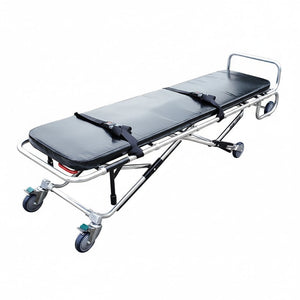
3. The pad. A level, properly sized concrete pad is non-negotiable — same rule as indoors, covered in the installation checklist. The insulated floor option earns its keep outdoors, cutting heat gain through the slab, and pairs with the ramp option for smooth cot access.
4. Sun and siting. North-side placement, shade, or even a light-colored roof cap measurably cuts runtime — the ambient factors in our operating-cost guide apply double outdoors.
5. Security and dignity. An outdoor mortuary room should be fenced or screened, locked, and sited away from public view — both for chain-of-custody and for the families you serve. Check local zoning and health department requirements before you pour the pad; requirements vary by jurisdiction.
Built for It
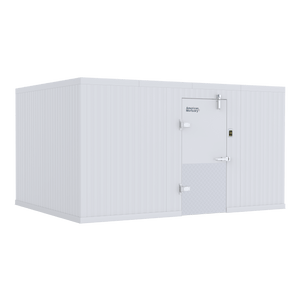
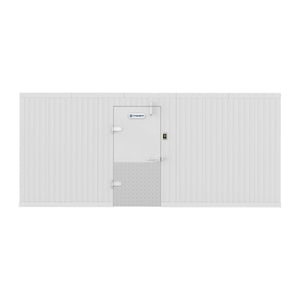
AMC walk-ins are panel-built rooms on foamed-in-place, high R-value panels with a Limited 15-Year structural panel warranty (WR-1.0) — the same construction indoors or out. The Build-It-Out configurator lets you place the door precisely where your outdoor workflow needs it (four locations, right or left hinge, 36″ or 48″), and every one of the 33 models in the walk-in collection can be specced for exterior duty. Size the room with the capacity guide, then get the full decision framework in the Walk-In Cooler Buying Guide.
Frequently Asked Questions
Can a walk-in cooler be installed outside?
Yes — with weather protection over the panel roof, a level graded pad, and a refrigeration level matched to your climate, walk-in coolers run reliably outdoors year-round.
Do outdoor walk-in coolers cost more to run?
They carry a higher ambient heat load in summer sun, which is why they are specced with higher refrigeration levels; smart siting, shade, and an insulated floor close most of the gap.
Do I need a permit for an outdoor walk-in cooler?
Requirements vary by jurisdiction — check local zoning, building, and health department rules before pouring the pad.
Spec an Outdoor Walk-In the Right Way
Send us your site, climate, and case volume — we will spec the weather protection, refrigeration level, floor, and door placement before you pour the pad.
Call 1-888-792-9315 or email cool@mymortuarycooler.com

