


Professional equipment scope | Written RFQ review
Bariatric mortuary equipment for larger-decedent handling
Equipment planning for obese cases must follow the whole handling route, from first-call removal through transfer, preparation and refrigerated storage. Select each component by its documented dimensions, rating and intended use. A high-capacity cot does not by itself establish a compatible lift, cooler or receiving arrangement.

Define the equipment and operating scope
Define a larger-decedent workflow
Describe the intended first-call, facility-transfer and storage tasks without including identifying case information. Identify the expected size range, receiving conditions and equipment already in use. A useful RFQ captures interfaces and operating constraints rather than only asking for the highest advertised product capacity.
Select the removal cot and accessories together
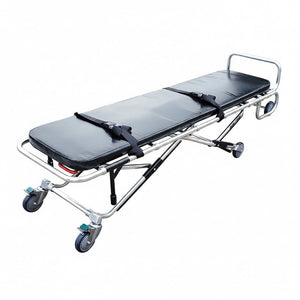
Review the actual cot model, mattress or pouch requirements, handling points and approved accessories. Wider equipment can change vehicle fit and access needs. A pouch, cover or removal tray must not be assumed compatible because it is marketed for bariatric work.
Check vehicle loading and the receiving route
Provide loading height, vehicle opening dimensions and the route from the vehicle to the facility. Include thresholds, ramps, passage widths and turning areas. Requirements for transport fastening, loading practices and staffing must be reviewed by the responsible operator using the exact equipment instructions.
Coordinate transfer, preparation and storage
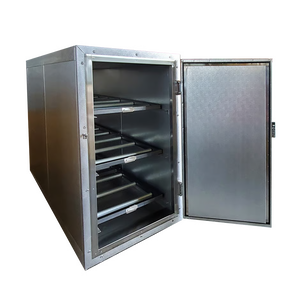
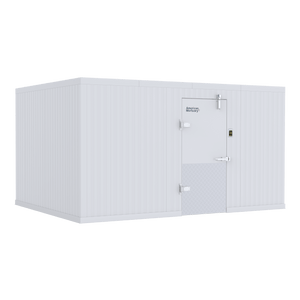
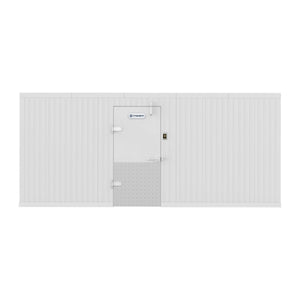
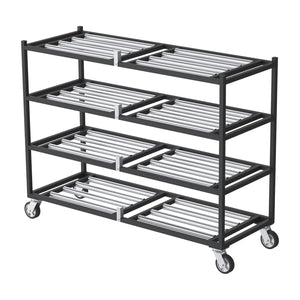
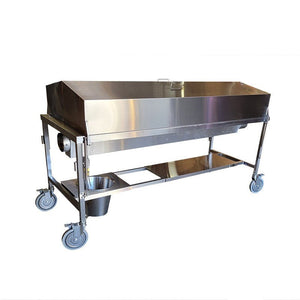
Identify the selected lift, preparation surface, board or tray and refrigeration format. Compare the applicable heights, widths and documented interfaces. An embalming table is a preparation product, not automatically a transport cot or a substitute for a storage rack.
Document limitations rather than add capacities
Request the rating and intended use for every selected product and accessory. Do not add the ratings of multiple components or assume that a stronger component changes the limit of another item. The proposed workflow needs its own review against the equipment documentation.
Request durable, maintainable equipment
Ask for the applicable construction, cleaning, inspection, replacement-parts and warranty details. If American manufacture or a particular material is required, request item-level documentation. No guaranteed service life, injury-prevention result or universal heavy-duty qualification is claimed for the complete package.
Equipment references for a coordinated quote
Review these existing product records by model and intended use. Product presence is not a compatibility statement, rental offer, clinical qualification or confirmation that an accessory is included.
 HD 1000 MAX Mortuary Lift G1 with Multi-Directional Top
A project-ready equipment RFQ
Facility and purchasing contact
Identify the owner, site location, responsible purchasing contact, intended use and project stage. Include the bid reference and instructions if the request is part of a public or institutional procurement.
Equipment schedule and interfaces
List selected models, quantities, options, room dimensions, access openings and transfer requirements. Keep each cooler, rack, cot, lift, board, tray and accessory separately identified.
Utilities and delivery responsibilities
Describe the proposed location, available utilities, receiving conditions, unloading and placement scope. Requested dates are planning inputs, not a delivery commitment.
Technical and purchasing documents
Request the applicable drawings, CAD availability, installation information, maintenance documents, warranty, manufacturer identity and origin records. Identify requested NAICS, UNSPSC, PSC/FSC, NIGP, SIC, CSI or HS/HTS classifications for item-level review; no code or qualification is invented.
Work with a family-owned and operated business on a documented equipment request. American-made or domestic-preference requirements must be checked for the exact quoted items; they are not blanket claims for every catalog product.
Selection and procurement questions
Is bariatric equipment only a wider cot?
No. The quote should consider access, loading, transfer heights, storage, accessories and the documented limits of every selected component.
Can the cot rating be used as the full-system rating?
No. A cot rating is specific to that item and its stated conditions. Other equipment and the proposed interfaces require their own review.
Can I include an oversized preparation table?
Yes, if the workflow calls for it. Keep the table’s preparation role separate from transport and storage, with its own model and technical documentation.
Do you provide an operator staffing prescription?
No. Staffing, handling procedures and training responsibilities remain with the organization and the applicable equipment instructions.
