


Professional equipment scope | Written RFQ review
Removal cots for first-call mortuary transport
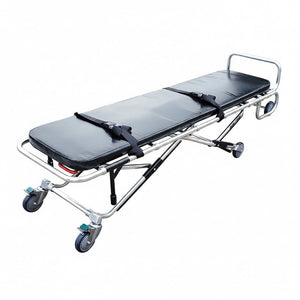
A removal cot is part of a first-call equipment system, not an interchangeable frame. Compare the intended removal task, vehicle loading route, selected cot and compatible accessories. Keep decedent transport separate from patient care, and make the actual model and required documentation visible in the equipment request.

Define the equipment and operating scope
Choose by the removal task
Identify routine first-call transport, larger-decedent requirements, restricted access or a need for compact storage. A folding stretcher, wheeled cot, scoop device and evacuation sled have different intended uses. Describe the task before treating these products as alternatives.
Review the whole vehicle interface
Measure the opening, loading height and available interior space and identify any loading tray or fastening equipment. Review the proposed combination against the selected product instructions. Similar frame shapes do not establish vehicle compatibility or a crash-tested transport arrangement.
Separate standard and bariatric requirements
State the expected size range and any extra-width access needs in the RFQ. Ask for model-specific dimensions and ratings rather than choosing only from a product name. Do not transfer a capacity statement from one cot to another model or accessory.
Specify pouches, covers and loading accessories
List pouch style, cover requirements and any removal tray by exact model where possible. Confirm dimensions and intended fit before final selection. Textile choices and equipment compatibility are separate decisions, and optional accessories are not assumed included with the cot.
Plan facility handoff and cleaning
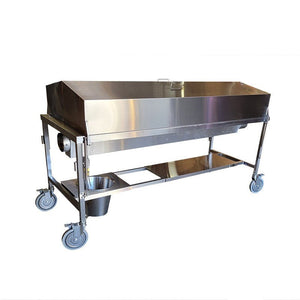
Identify the receiving surface, transfer height and storage location used after arrival. Request the cot’s cleaning and inspection instructions and the relevant replacement-parts references. A first-call cot is not automatically a preparation table, storage rack or clinical treatment surface.
Keep the quote and technical record together
Include quantities, selected models, accessory requirements, vehicle details and the receiving address. Request any required manufacturer, origin or procurement documentation for the exact items. No promised lead time, universal fit or operator-staffing guarantee is made.
Equipment references for a coordinated quote
Review these existing product records by model and intended use. Product presence is not a compatibility statement, rental offer, clinical qualification or confirmation that an accessory is included.
 TITAN 1200XL Bariatric Mortuary Cot, 1,000 lbModel / SKU: FS1-FC-1200XL-Q1Review model, documentation and configuration
 TITAN Aluminum Cot Removal Tray & Ramp – Model CT-90Model / SKU: TITAN-CT-90Review model, documentation and configuration
 TITAN Standard Mortuary Cot PouchReview model, documentation and configuration
A project-ready equipment RFQ
Facility and purchasing contact
Identify the owner, site location, responsible purchasing contact, intended use and project stage. Include the bid reference and instructions if the request is part of a public or institutional procurement.
Equipment schedule and interfaces
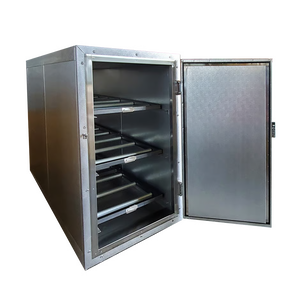
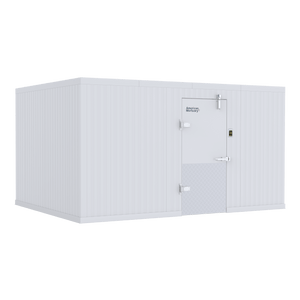
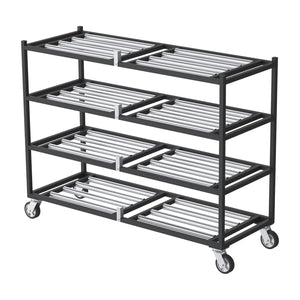
List selected models, quantities, options, room dimensions, access openings and transfer requirements. Keep each cooler, rack, cot, lift, board, tray and accessory separately identified.
Utilities and delivery responsibilities
Describe the proposed location, available utilities, receiving conditions, unloading and placement scope. Requested dates are planning inputs, not a delivery commitment.
Technical and purchasing documents
Request the applicable drawings, CAD availability, installation information, maintenance documents, warranty, manufacturer identity and origin records. Identify requested NAICS, UNSPSC, PSC/FSC, NIGP, SIC, CSI or HS/HTS classifications for item-level review; no code or qualification is invented.
Work with a family-owned and operated business on a documented equipment request. American-made or domestic-preference requirements must be checked for the exact quoted items; they are not blanket claims for every catalog product.
Selection and procurement questions
Is a mortuary removal cot an ambulance stretcher?
Not automatically. Mortuary use and patient-transport use are separate requirements. Request exact intended-use and transport documentation before considering equipment for patient care.
Can a folding mortuary stretcher replace a wheeled cot?
That depends on the intended task and product instructions. They should not be treated as interchangeable without a review of handling, loading and support requirements.
Are pouches and covers always included?
No inclusion is assumed here. Identify the requested accessory models and quantities and confirm the final written quote.
What makes a removal cot RFQ complete?
Provide the selected model, quantity, intended task, vehicle dimensions, receiving route and requested accessories. Exclude personal and case-identifying information.
