


Professional equipment scope | Written RFQ review
COVID-19 response lessons for morgue equipment readiness
COVID-19 morgue-response searches often begin with a practical question: how should a facility document additional refrigerated storage and transfer equipment before it is needed? Use this page to organize a facility-specific equipment review, not as clinical guidance or evidence that any product prevents SARS-CoV-2 transmission.

Define the equipment and operating scope
Turn a retrospective review into an equipment schedule
Record the storage constraints, receiving bottlenecks and equipment interfaces identified in the facility’s own COVID-19 review. Separate documented local experience from assumptions about another organization. Build the next RFQ around measurable requirements such as room dimensions, opening sizes, selected storage method and proposed operating duration.
Review temporary refrigeration as a facility project
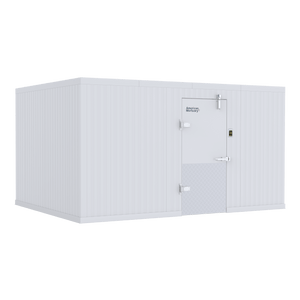
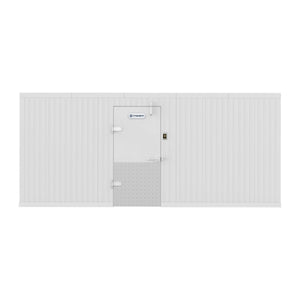
Identify the proposed cooler location, electrical service, access and receiving arrangements. A temporary-storage project still needs a clear scope for unloading, placement, utility connection and service. Do not assume that a photo of a cooler represents a COVID-19 deployment or a complete emergency operating package.
Include the handling equipment, not only cold storage
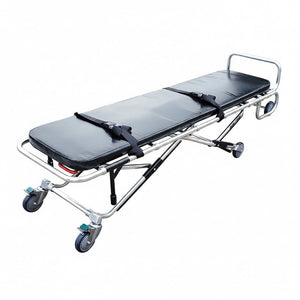
List cots, lifts, racks, boards and trays by actual model. Check the receiving route and the proposed transfer height at each interface. Avoid increasing storage positions on paper without reviewing how staff will access those positions under the facility’s approved procedures.
Keep clinical and infection-prevention decisions separate
State the facility’s current technical or cleaning requirements for review against the selected equipment documentation. Public-health guidance can change and may be jurisdiction-specific. This equipment page does not prescribe PPE, handling precautions, disinfection chemistry or disease-specific storage conditions.
Review purchase and temporary-use requirements honestly
Provide dates, location and the desired commercial arrangement. If rental is requested, ask for a written availability review rather than assuming a fleet or delivery promise. If ownership is preferred, identify the equipment’s intended use after the temporary capacity requirement ends.
Use a documented readiness review
Record the owner contact, equipment list, requested submittals and the project team’s unresolved decisions. Any required domestic-origin documentation, product listing or contract qualification must be checked for the exact line item. No COVID-19 endorsement, federal response affiliation or proven outbreak-performance claim is made.
Equipment references for a coordinated quote
Review these existing product records by model and intended use. Product presence is not a compatibility statement, rental offer, clinical qualification or confirmation that an accessory is included.
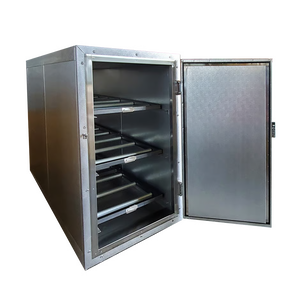
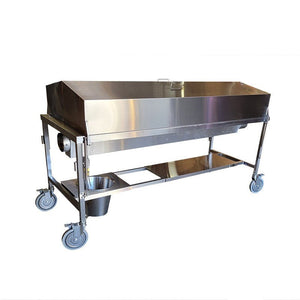
 2 Body Standard Roll-In Mortuary Cooler – Model 2BRModel / SKU: 2BSW-RH-STDReview model, documentation and configuration
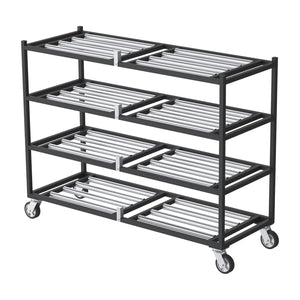
 4-Tier Cantilever Mortuary RackModel / SKU: Model#4T-C-1Review model, documentation and configuration
 HD Mortuary Plastic Storage BoardReview model, documentation and configuration
A project-ready equipment RFQ
Facility and purchasing contact
Identify the owner, site location, responsible purchasing contact, intended use and project stage. Include the bid reference and instructions if the request is part of a public or institutional procurement.
Equipment schedule and interfaces
List selected models, quantities, options, room dimensions, access openings and transfer requirements. Keep each cooler, rack, cot, lift, board, tray and accessory separately identified.
Utilities and delivery responsibilities
Describe the proposed location, available utilities, receiving conditions, unloading and placement scope. Requested dates are planning inputs, not a delivery commitment.
Technical and purchasing documents
Request the applicable drawings, CAD availability, installation information, maintenance documents, warranty, manufacturer identity and origin records. Identify requested NAICS, UNSPSC, PSC/FSC, NIGP, SIC, CSI or HS/HTS classifications for item-level review; no code or qualification is invented.
Work with a family-owned and operated business on a documented equipment request. American-made or domestic-preference requirements must be checked for the exact quoted items; they are not blanket claims for every catalog product.
Coordinate the broader response plan
The ASPR TRACIE Fatality Management collection describes the coordinated roles of healthcare, public health, emergency management, medical examiners/coroners and funeral-service organizations. Use its planning resources alongside the responsible agency’s current procedures; the reference does not endorse AMC or approve an equipment configuration.
For historical facility-planning context, the 1998 OJP Forensic Laboratories planning handbook addresses facility planning and service coordination. It is not a current code standard, clinical protocol or product certification.
Selection and procurement questions
Are these products certified specifically for COVID-19 response?
No disease-specific certification is claimed here. Ask for the actual documentation for the selected item and have the responsible facility team review it against the intended use.
Does this page provide current clinical guidance?
No. Follow current guidance and procedures from the responsible health authorities and the facility’s clinical, infection-prevention and occupational-health teams.
Are the images photographs of pandemic deployments?
No. They are catalog equipment references, not claims of an installation, customer deployment, emergency-response contract or clinical outcome.
Can the equipment review include renovation and routine overflow needs?
Yes. Identify those as separate operating scenarios and document the selected products, placement, utilities and commercial requirements for each.
