



Funeral Biers and Church Trucks: Choosing and Using a Casket Stand

What a funeral stand does
A funeral stand is a platform or frame that holds a casket or body during viewings, services and processions. It is reusable equipment that stays with the funeral home, while the casket goes with the family. Many people call the stand a bier, a word English has used for centuries to describe a frame for carrying the dead.
Key takeaways
- During a viewing, the stand usually sits in a quiet part of the room where family can walk past without crowding.
- Many funeral homes use a wheeled stand often called a church truck.
- Lock the wheels before anyone lets go of the casket, check that the stand is level, and confirm the casket is centered.
- Start with the casket sizes you handle most often and the weight they carry.
Because the stand carries a heavy load, it needs a stable base and a top surface that keeps the casket centered from end to end.
Viewings, services and processions
During a viewing, the stand usually sits in a quiet part of the room where family can walk past without crowding. During a service, it may stand at the front of a chapel or church. For a procession, staff move the casket from the building to the vehicle, and the stand keeps the casket steady for that short walk.
Each setting asks for something different. A chapel may need a stationary stand with drapes, while a procession calls for something that rolls smoothly and turns tightly in narrow hallways.
Church trucks and wheeled supports
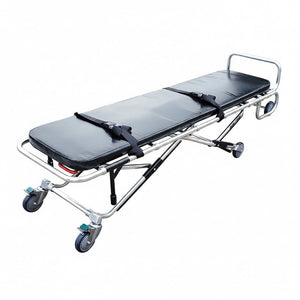
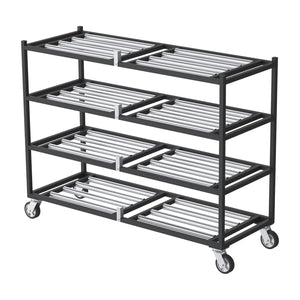
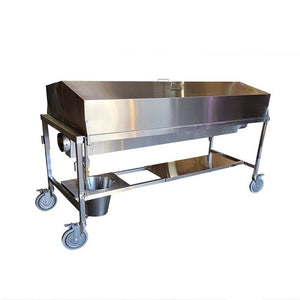
Many funeral homes use a wheeled stand often called a church truck. These stands roll so staff can move a casket through doorways, along aisles and onto a hearse or flower car. Quiet-rolling casters matter at a funeral, because squeaks break the mood of a solemn moment.
Handling the casket safely
Safe handling starts before the casket is placed. Lock the wheels before anyone lets go of the casket, check that the stand is level, and confirm the casket is centered. Move slowly, call out turns to the team, and walk the route before a service so there are no surprises at the door.
When a casket is heavy or the team is small, a mechanical aid can help. Casket lifts help staff move a casket onto a bier or church truck without lifting it by hand. Browse the body and casket lifts collection, or look at the Easy Lift Casket Jacks Set product page for one option.

Choosing a stand for your facility
Start with the casket sizes you handle most often and the weight they carry. Then think about where the stand will be used. A stand that works well in a chapel may be awkward on a long hallway with a tight turn. Storage matters too, especially in smaller facilities where equipment must fit against a wall between services.
Ask whether the stand needs wheels, whether it should be stationary, and how it will be cleaned between uses. Compare the finish, the locks and the parts that wear, such as casters and bumpers. Ask about replacement parts before you buy, so a worn caster does not take the stand out of service.
Budget is part of every decision, and so is how often the stand will be used. A piece that gets daily use should be built for that pace. Occasional services may call for a lighter model or a different plan, such as a shared stand between two locations.
The chapel and funeral service supplies collection covers related furnishings for services held in your building.
Related equipment from our catalog


| Product | SKU / model | Catalog price (checked Nov 19, 2026) |
|---|---|---|
| Heritage Casket Bier | AME-CB210 | $3,521.38 |
| TITAN FS1-CT100 Heavy-Duty Church Truck | FS1-CT100-OB | $404.91 |
| TITAN Casket Trolley - Display & Utility Cart | FS1-CTRLY-650 | $316.80 |
Prices are the current listed catalog prices and can change; options, freight and installation are quoted separately.
Frequently asked questions
What is the difference between a casket and its support stand?
A casket is the container that holds the deceased. The support stand carries the casket during viewings, services and processions. The two are separate pieces of equipment that work together.
Can a casket be moved without wheels?
Yes. Some stands are fixed in place, so the casket is moved by a team of bearers or with a casket lift. Wheeled stands roll on casters, which makes short moves easier when the casters are kept in good condition.
Why should wheel locks be checked before a casket is placed?
A wheel lock keeps the stand from rolling while someone places or removes a casket. Checking the locks before loading reduces the risk of the stand shifting during a service.
Does every funeral home need a casket lift?
Not every funeral home does. A casket lift is most useful when staff regularly move heavy caskets or often work with a small team. It can reduce strain on staff during routine transfers.
Equipment for moving caskets with care
American Mortuary Coolers supplies casket lifts and related equipment for funeral homes. Tell us the casket sizes and room layout you work with, and we will help you narrow the choices.
Call 1-888-792-9315 or email cool@mymortuarycooler.com
Resources & Related Guides
Related products
Planning guides
See all videos on the AMERICAN MORTUARY EQUIPMENT™ YouTube channel
