



Facility equipment · Family-owned · Quote only
State crime laboratory equipment
Organize state crime-lab equipment by laboratory discipline, room and operating task. Coordinate cabinets, sinks, storage, selected laboratory refrigeration and supplies while keeping specialized analytical systems and containment requirements clearly defined.

Biology, DNA and analytical support rooms
Record the work performed, instruments selected, consumables stored and required separation between tasks. Biology and DNA, toxicology support, trace-evidence and other laboratory sections should identify their own cleaning, security and equipment-service requirements. Shared finishes do not make their technical needs interchangeable.
Custom storage and working arrangements
Build a cabinet schedule with stainless steel, powder-coated steel or powder-coated stainless steel requests, dimensions, doors, drawers, shelves and locks. Identify specimen or evidence container sizes and loaded weights. State requirements for access control and retention separately; a lock request is not a validated evidence-management system.
Instrument and building-system coordination
Provide instrument footprints, service clearances and power, water, waste or exhaust requirements. Keep analytical instrument selection, fume-control equipment and regulated storage with their responsible specialists. This equipment planning page does not represent USPE as a supplier of every forensic analytical system.
Statewide procurement and phased facilities
Use site, room and position identifiers for headquarters, regional laboratories and renovations. Keep common finish and hardware choices separate from local room dimensions and utilities. Include specification sections, requested purchasing codes, domestic-origin documentation requirements and required submittals with the RFQ.
Laboratory equipment, storage and supplies
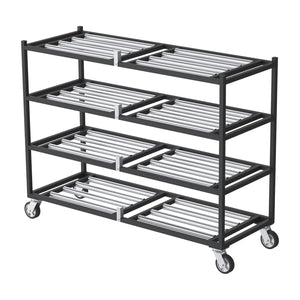
Follow each equipment family to the current catalog and native product pages. Identify selected models, quantities and options in the same request; listing an equipment family does not confirm suitability for a particular procedure.
Separate medico-legal responsibilities
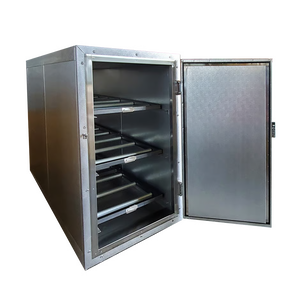
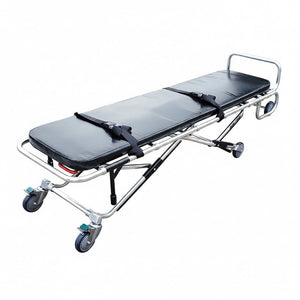
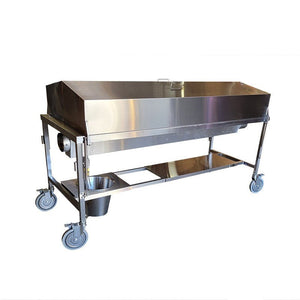
For agencies that also manage a morgue, coroner function or postmortem examination facility, prepare a separate schedule for mortuary refrigeration, body handling, autopsy tables, sinks, grossing stations and autopsy saws. Do not assume those items belong in a general crime laboratory.
A coordinated equipment RFQ
Room and equipment schedules
Send measured plans, selected model references, quantities, required options and delivery-site details. Identify utility, ventilation, structural and installation responsibilities separately from the supplied equipment.
Durability and service planning
Request the applicable construction details, loaded capacities, cleaning instructions, warranty terms and parts references for the selected models. For steel casework, identify substrate, finish, hardware and maintenance needs without assuming a universal service life.
Public-agency purchasing
Include bid instructions, required submittals, domestic-origin documentation and requested NAICS, UNSPSC, PSC/FSC, NIGP, SIC, CSI or HS/HTS classifications. Codes and American-made or domestic-preference requirements need review for the exact items and contract scope; no government endorsement or contract status is implied.
Family-owned and operated
Work with a family-owned, family-operated business on the equipment request. Keep the room plans and selected products together, with final configuration and inclusions documented in the written quote.
For a broader planning reference, the Office of Justice Programs' 1998 Forensic Laboratories facility-planning handbook discusses user needs, laboratory layouts and service coordination. It is historical guidance, not a current code standard or a USPE product approval.
Equipment planning questions
Does an agency name determine the equipment package?
No. Define the procedures, room responsibilities, selected models and required documentation. A sheriff's crime laboratory, coroner receiving facility and state medical examiner autopsy room have different operating requirements.
Can one request include equipment and recurring supplies?
Include both, with equipment models and options separated from glove sizes, PPE requirements and supply quantities. Final availability, fit, scope and purchasing requirements are reviewed for the written quote.
Does this page claim evidence-system certification or agency approval?
No. Any required security, chain-of-custody, laboratory performance or procurement qualification must be evaluated against the exact equipment and agency requirements.

