



Facility equipment · Family-owned · Quote only
State medical examiner office equipment
Plan state medical examiner equipment as a connected receiving, storage, transfer and examination system. Separate headquarters, district offices and satellite needs so common specifications do not obscure room-specific layouts or service requirements.

Central and regional facility schedules
Assign an identifier to every site, room and equipment position. Distinguish full postmortem examination facilities from receiving, transfer or refrigerated-holding locations. Record quantities and selected configurations by site instead of repeating a generic full-room package throughout the state system.
Routine capacity and surge planning
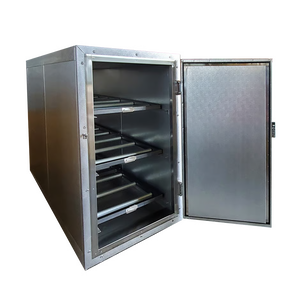
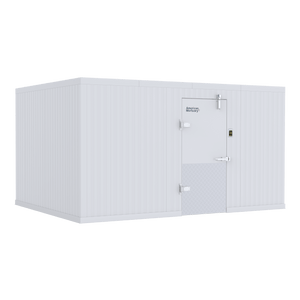
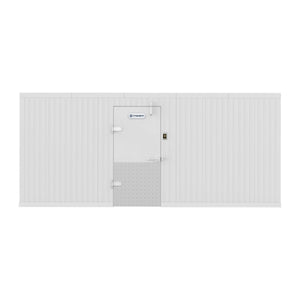
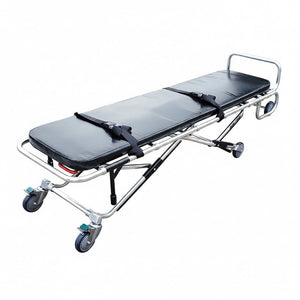
Document normal occupancy, peak demand, receiving frequency and the intended transfer method. Coordinate refrigeration, racks, trays, lifts and carriers by their actual dimensions and interfaces. Additional storage capacity does not resolve staff circulation, loading access or building-service limits by itself.
Autopsy, pathology and support equipment
Itemize selected autopsy tables, sink stations, grossing equipment, saws, scales, custom casework and room supplies. Describe the operator positions, cleaning method and building connections for each room. Identify required ventilation and containment reviews without treating a catalog selection as a facility approval.
State purchasing and lifecycle documentation
Include project specifications, purchasing instructions, acceptance requirements and the required material, origin, installation and maintenance records. Keep replacement parts and recurring supplies connected to the selected models. Statewide purchasing does not imply an existing government contract, approved-vendor status or automatic domestic-preference eligibility.
Equipment across the medical examiner and coroner workflow
Follow each equipment family to the current catalog and native product pages. Identify selected models, quantities and options in the same request; listing an equipment family does not confirm suitability for a particular procedure.
Water controls and station connections
Begin water-service coordination with the USPE Hands-Free Water Control, then identify the selected Autopsy Station with Center Sink or other required station. Keep the Stainless Embalming Sink Station and Ventilated Wall-Mount Embalming Station specific to the procedure; embalming equipment is not automatically required in every medical examiner or coroner room.
A coordinated equipment RFQ
Room and equipment schedules
Send measured plans, selected model references, quantities, required options and delivery-site details. Identify utility, ventilation, structural and installation responsibilities separately from the supplied equipment.
Durability and service planning
Request the applicable construction details, loaded capacities, cleaning instructions, warranty terms and parts references for the selected models. For steel casework, identify substrate, finish, hardware and maintenance needs without assuming a universal service life.
Public-agency purchasing
Include bid instructions, required submittals, domestic-origin documentation and requested NAICS, UNSPSC, PSC/FSC, NIGP, SIC, CSI or HS/HTS classifications. Codes and American-made or domestic-preference requirements need review for the exact items and contract scope; no government endorsement or contract status is implied.
Family-owned and operated
Work with a family-owned, family-operated business on the equipment request. Keep the room plans and selected products together, with final configuration and inclusions documented in the written quote.
For a broader planning reference, the Office of Justice Programs' 1998 Forensic Laboratories facility-planning handbook discusses user needs, laboratory layouts and service coordination. It is historical guidance, not a current code standard or a USPE product approval.
Equipment planning questions
Does an agency name determine the equipment package?
No. Define the procedures, room responsibilities, selected models and required documentation. A sheriff's crime laboratory, coroner receiving facility and state medical examiner autopsy room have different operating requirements.
Can one request include equipment and recurring supplies?
Include both, with equipment models and options separated from glove sizes, PPE requirements and supply quantities. Final availability, fit, scope and purchasing requirements are reviewed for the written quote.
Does this page claim evidence-system certification or agency approval?
No. Any required security, chain-of-custody, laboratory performance or procurement qualification must be evaluated against the exact equipment and agency requirements.

