


Body Bag Handles and Lifting Capacity: What the Ratings Mean


Handle ratings on body bags are given per opposing pair: two handles directly across from each other, lifted at the same time. A rating of 150 lb per pair does not mean one handle holds 150 lb, and it does not mean the bag is rated for 150 lb times the number of pairs if the lift is uneven.
Lift correctly
- Keep the bag level and the weight centered.
- Lift with opposing pairs together, with enough people for every pair.
- Avoid lifting at an angle on stairs; it loads the end handles.
- Never drag a body bag across rough ground.
Riveted vs sewn handles
Riveted handles fasten web straps through the vinyl with metal rivets and are common on PVC disaster bags such as the 2XL Disaster Bag, 8 Handles. Sewn handles are stitched to fabric and mesh, as on the Water Recovery Mesh Bag, 10 Handles, which is rated 200 lb per pair.
When there are no handles
Bags without handles, like the Adult Chlorine-Free Bag, No Handles and Diamond Chlorine-Free Bag, Oversize XL, are meant to be moved on a cot, tray or carrier. Lifting them by the material is not safe.
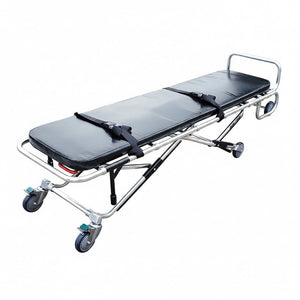
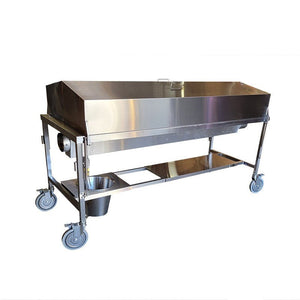
For heavy decedents, use a rated cot or lift. See first call transport best practices.
Shop the line
See every model, size and case price on the American Mortuary Equipment body bag page or in the body bags and disaster pouches collection.
More body bag guides: Body bag sizes: child, adult, XL and bariatric · Chlorine-free body bags and cremation · Water recovery body bags for dive and rescue teams · Envelope vs straight vs perimeter zippers · Disaster body bags: 18 mil PVC vs poly
Funeral home PPE to order with body bags
Gown up before every removal and transfer. Our blue thumb loop isolation gowns and pink thumb loop isolation gowns are impervious polyethylene embalming gowns, 100 to an AME case from $97.02. Compare both on the isolation gown and embalming gown page, and add exam gloves by the case, extended-cuff gloves, disposable coveralls and DuPont Tychem. See the funeral home PPE guide, all mortuary PPE, or shop Funeral Source One and the funeral supply store for the rest of your order.
