

First Call Transport: Best Practices for Safe Body Removal
First Call Transport: Best Practices for Safe Body Removal
By American Mortuary Coolers — updated 2026
First call body removal is one of the most physically and logistically demanding aspects of funeral service. Done right, it protects your staff, honors the deceased with dignity, and keeps your operation compliant with OSHA and state regulations. Done wrong, it exposes your team to injury, liability, and reputational risk. This guide provides a step-by-step best practice framework for safe, professional first call transport — covering equipment, technique, PPE, and OSHA compliance.
Step 1: Pre-Call Equipment Check
Before leaving for a removal, every first call vehicle should be stocked and inspected. Use this checklist:
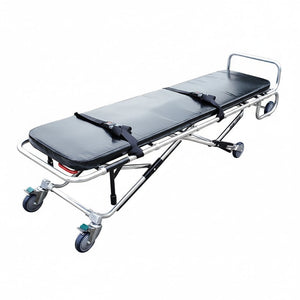
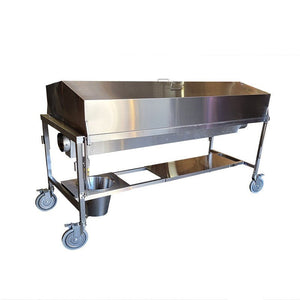
- Mortuary cot: Frame integrity, caster function, locking mechanism tested. Browse our full mortuary cots collection.
- Body bags: Multiple sizes including XXL for bariatric cases. AMC carries both 15-mil and 18-mil heavy-duty body bags.
- Slider boards: Essential for surface-to-cot transfers in tight spaces.
- PPE: Gloves, gown, eye protection, N95 masks for infectious cases.
- Disinfectant supplies: EPA-registered, hospital-grade spray and wipes.
- Documentation: Removal authorization, ID tags, chain of custody forms.
Step 2: Scene Assessment
Upon arrival, assess the environment before moving any equipment:
- Identify the deceased's location and the safest access path — note doorways, stairs, elevators, and obstacles.
- Assess estimated weight to confirm your cot's capacity is adequate. If bariatric, deploy the PRO 1000X or Powered PMC1.
- Identify any infection risk factors — decomposition, biohazard indicators, or known communicable disease — and don appropriate PPE before entering.
- Confirm jurisdiction and removal authorization before proceeding.
Step 3: Safe Loading Technique
Improper loading is the leading cause of first call injuries. Follow this sequence:
- Lower the mortuary cot to its lowest position or floor level. Lock all casters.
- Position the slider board between the surface and the cot platform.
- As a team, gently slide — do not lift — the deceased onto the cot using the slider board.
- Center the body on the platform, applying straps to secure for transport.
- Raise the cot to transport height. Confirm all locks are engaged before moving.
OSHA's Manual Material Handling guidelines require two-person teams for all body removal operations. industry best practices provide additional technique guidance aligned with industry best practices.
Step 4: Transport and Delivery
Safe transport from scene to vehicle to receiving facility requires continuous attention:
- Navigate narrow corridors and stairs slowly — use a spotter on the lower end for staircase descents.
- Secure the cot in the vehicle before departure. Unsecured cots in transit are an OSHA violation.
- Maintain chain of custody documentation throughout transport.
- At the receiving facility, lower the cot to the appropriate height and use a slider board for the transfer to a gurney or mortuary rack.
Step 5: Post-Removal Decontamination
After every removal, decontaminate all equipment that contacted the deceased or the scene:
- Spray all cot surfaces, frame, and casters with EPA-registered disinfectant. Let sit per dwell time on label.
- Wipe down and air-dry before storing or reusing the cot.
- Dispose of all single-use PPE in a biohazard-labeled container.
- Log the removal, equipment used, and decontamination in your OSHA exposure control plan records.
Questions? Call 1-888-792-9315 or visit our contact page.
Frequently Asked Questions
What PPE is required for a first call body removal?
At minimum: nitrile or latex gloves, a disposable gown, and eye protection. For decomposed or infectious cases, an N95 respirator or PAPR may be required under OSHA 29 CFR 1910.1030 bloodborne pathogen standards.
How many people are needed for a first call removal?
OSHA and NFDA guidance recommends two-person teams for all standard removals. For bariatric cases (over 300 lbs), additional personnel or powered equipment such as the PMC1 powered mortuary stretcher is strongly recommended.
What is the correct way to load a body onto a mortuary cot?
Always lower the cot to its lowest position or floor level. Use a slider board for surface-to-cot transfers. Maintain team communication, keep the body centered on the platform, and engage caster locks before transport.
How do you clean a mortuary cot after a removal?
Wipe all surfaces with an EPA-registered, hospital-grade disinfectant immediately after the removal. Pay particular attention to caster wheels, frame joints, and undercarriage. Allow to air-dry before storage.
What should be in a first call vehicle?
A properly equipped first call vehicle should carry at minimum: one or two mortuary cots, body bags in multiple sizes, slider boards, PPE supplies, disinfectant, straps, and documentation forms.
Are there regulations on body transport vehicles?
Yes. Most states have specific regulations on hearse and transport vehicle requirements. Check with your state funeral board. OSHA bloodborne pathogen standards also apply to vehicle surfaces and cleaning protocols.
140 Kwick Way Lane, Johnson City, TN 37615
Phone: 1-888-792-9315 | Email: sales@mymortuarycooler.com
Mortuary Cots | Morgue Coolers | Financing | Contact Us | FAQ

