

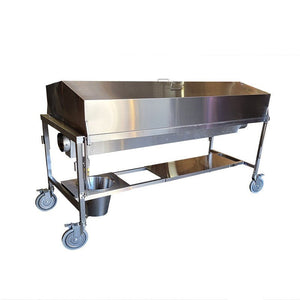
Veterinary Necropsy Coolers — Buyer's Guide to Animal & Pet Cold Storage (2026)
Veterinary practices, university animal-science programs, diagnostic labs, and pet aftercare providers all need reliable cold storage — but a veterinary necropsy cooler is not the same as a general-purpose walk-in. This guide covers how to size, specify, and buy animal and pet cold storage that holds remains safely between intake, necropsy, cremation, or release.
Why veterinary cold storage is different
Unlike human mortuary coolers, veterinary necropsy storage has to accommodate an unusually wide size range — from small companion animals to large- and equine-sized patients — often in the same facility. That drives different decisions about shelving, floor loading, door width, and whether you need refrigerated holding, frozen storage, or both. Sanitation matters more too: necropsy and diagnostic work demand surfaces and drainage that are easy to clean and disinfect between cases.
How much capacity do you need?
Size to your peak caseload, not your average. Consider:
- Typical and peak number of animals held at once
- Your species mix and the largest patient you must accommodate (companion, large breed, or equine/livestock)
- Average hold time before necropsy, cremation, or release
- Whether you also store specimens or tissue for diagnostics
If you are not sure, our team can right-size a unit from your weekly caseload — request a quote and we will spec it with you.
Walk-in vs. reach-in for veterinary settings
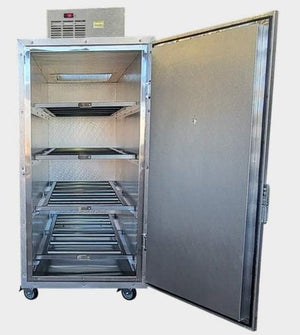
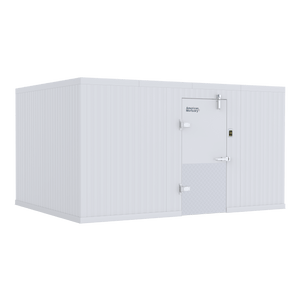
Reach-in and upright units suit clinics with lower volume and smaller patients. Walk-in coolers fit shelters, universities, diagnostic labs, equine and mixed practices, and pet-cremation operations that need racked capacity and large-patient access. Browse veterinary necropsy walk-in coolers and related veterinary equipment.
Temperature: refrigerated holding vs. frozen storage
Refrigerated holding is typically maintained just above freezing (around 36–40°F) for short-term storage before necropsy or release. For longer retention — pending diagnostics, owner decisions, or batch cremation — frozen storage near 0°F slows decomposition substantially. Many facilities run both: a refrigerated unit for active cases and a freezer for longer holds.
Features that matter
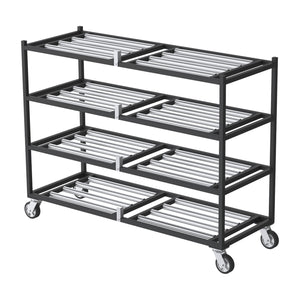
- Racking and trays sized for your species mix, so you use vertical space efficiently
- Cleanable interiors and floor drainage for necropsy and diagnostic sanitation
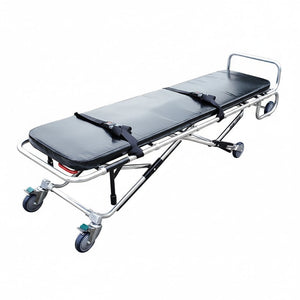
- Door width and threshold that allow gurneys, lifts, or large-patient handling
- Casters or ramp access for roll-in loading where floor space allows
- Reliable, serviceable refrigeration rated for your climate and run time
Pricing and financing
Veterinary cold-storage pricing depends on capacity, refrigerated vs. frozen, racking, and access configuration. We build to spec and ship nationwide, and equipment financing and leasing are available for clinics, universities, and institutional buyers — see financing options or request a quote. Questions? Call 1-888-792-9315.
Frequently asked questions
Do I need a refrigerator or a freezer for animal remains?
For short holds before necropsy, cremation, or release, refrigerated storage is usually sufficient. For longer retention, choose frozen storage or run both.
Can one cooler handle both small pets and large or equine patients?
Yes — with the right interior height, door width, and racking. Tell us your largest expected patient and we will spec accordingly.
How big a unit does my clinic need?
Size to peak caseload and your largest patient, not your average day. We can right-size from your weekly numbers.
Is financing available for veterinary facilities?
Yes — clinics, universities, shelters, and diagnostic labs can finance or lease. See our financing page or request a quote.
Ready to spec your veterinary necropsy cooler? Request a fast quote or call 1-888-792-9315 — built in Tennessee, shipped nationwide.

